Hundred Quarters (百刻)
2026 · Digital Art · Landscape Simulation · Computer Vision
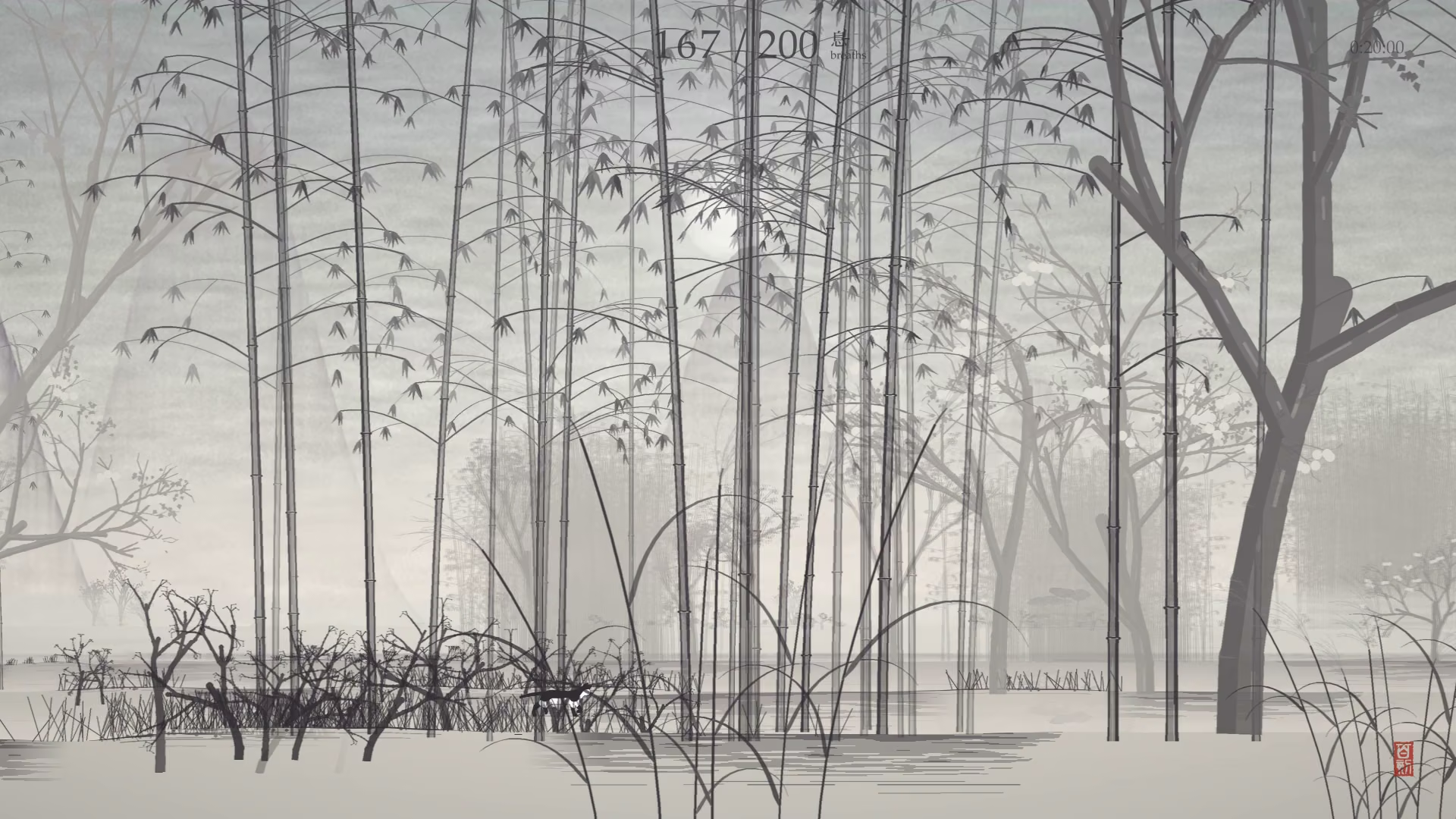
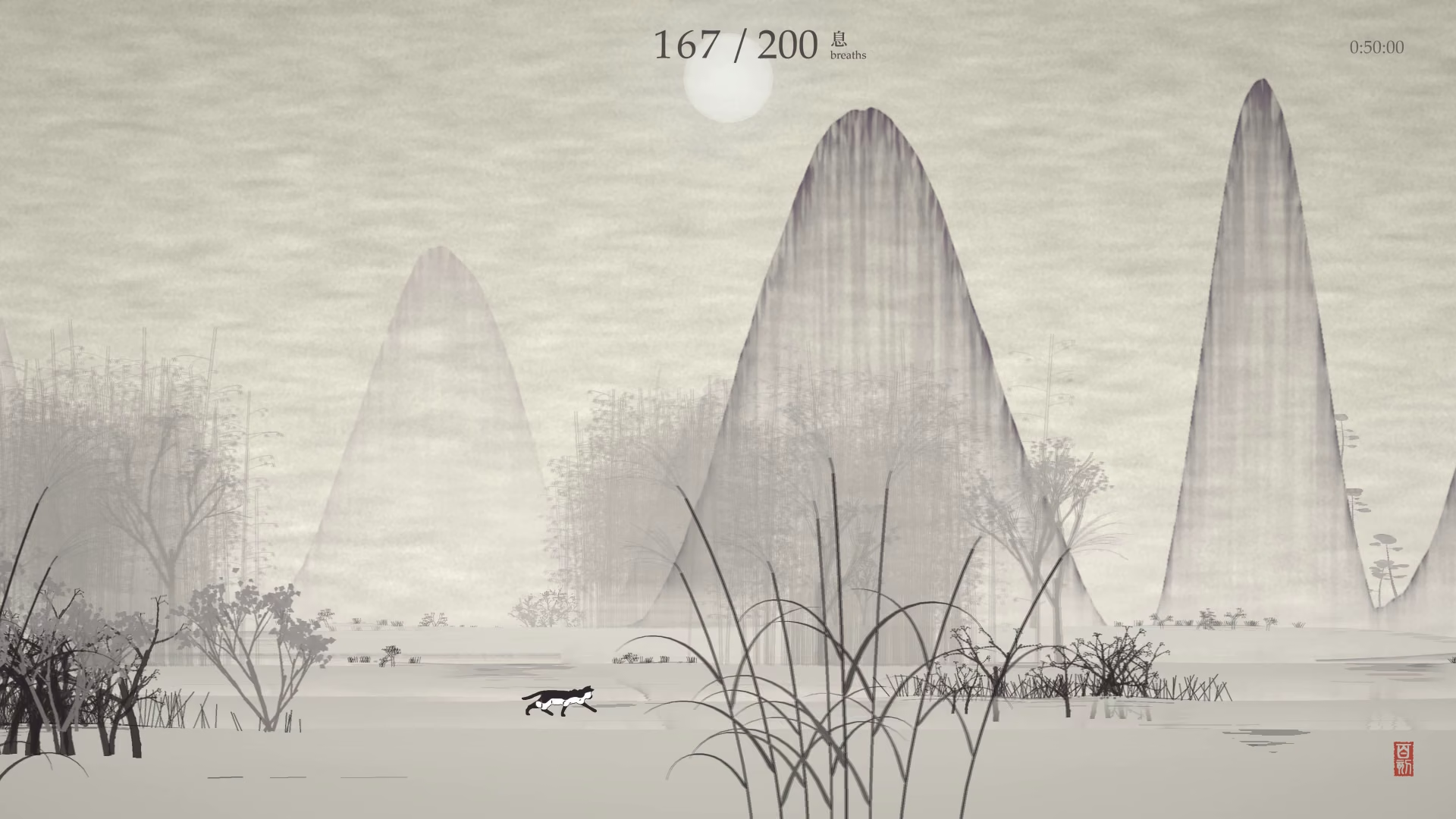
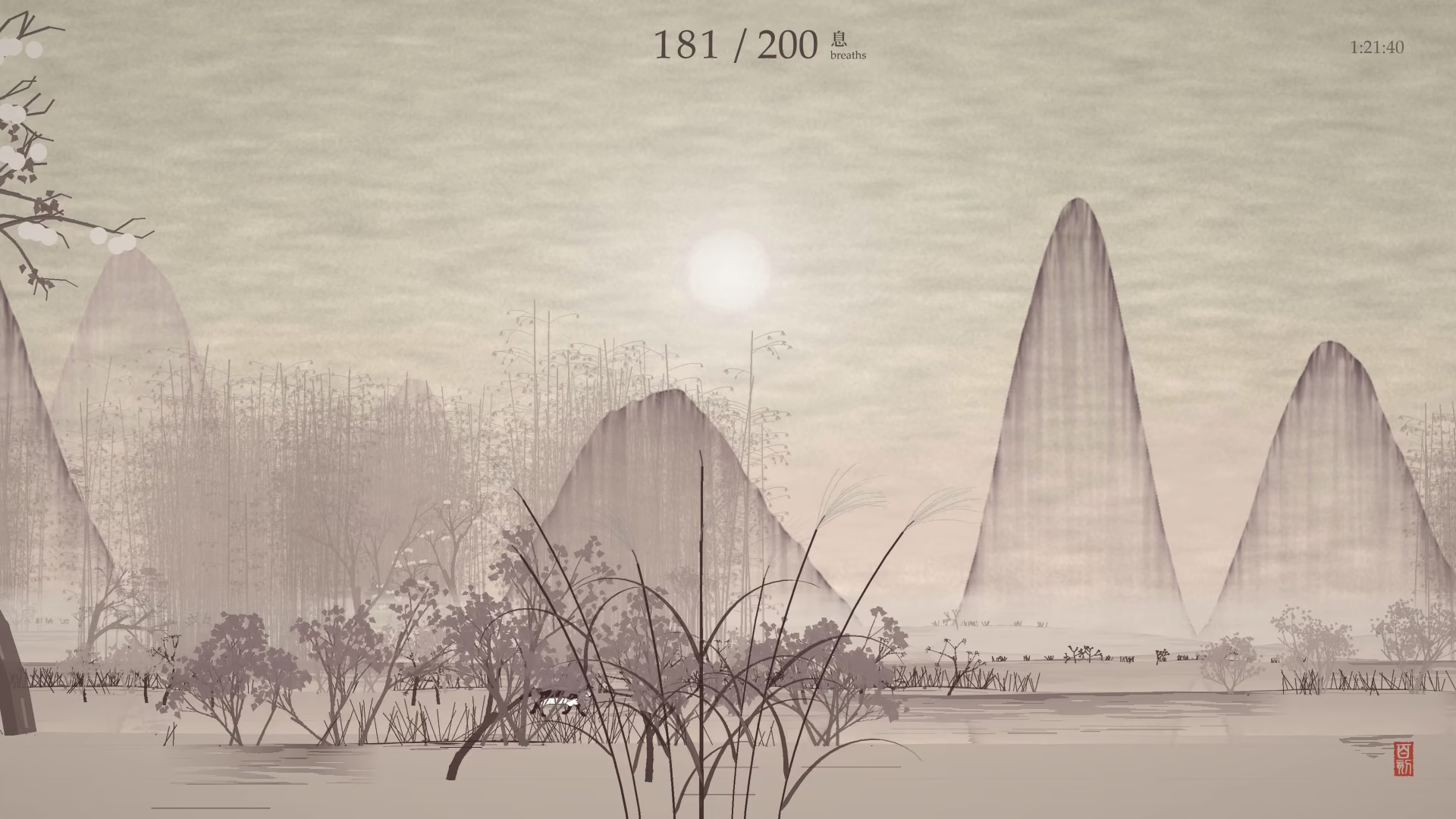
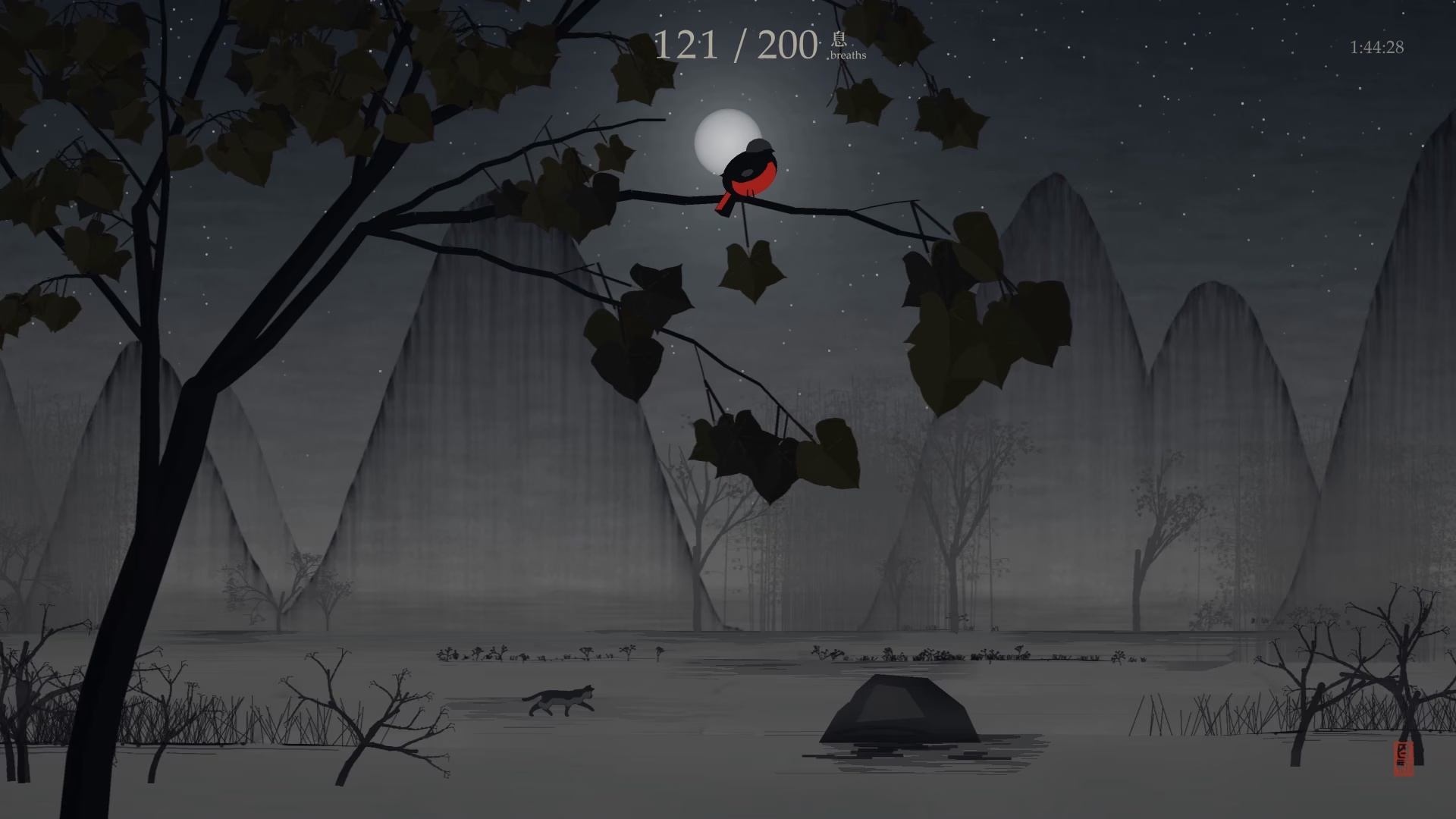
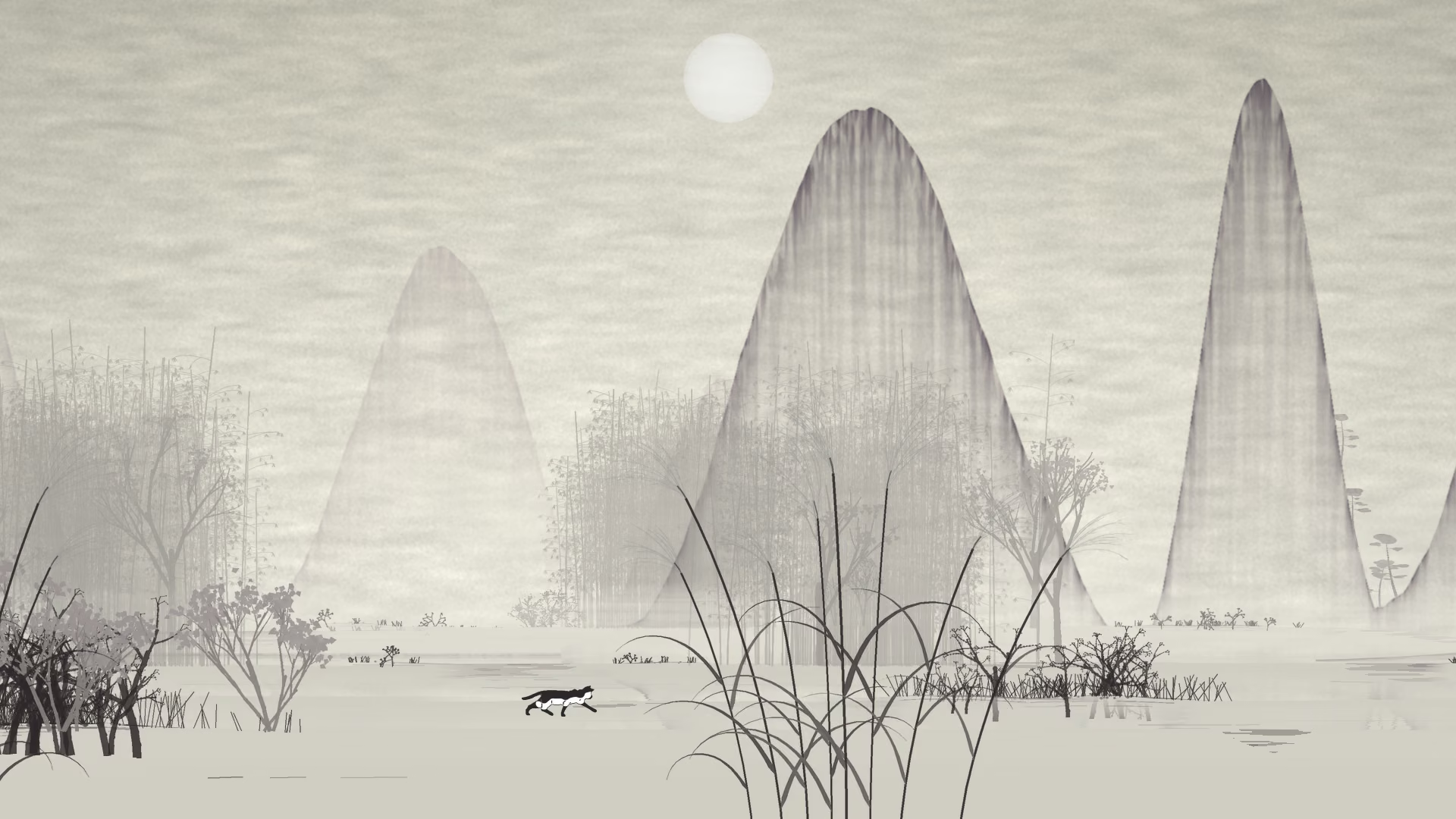
Hundred Quarters is a procedural system that generates landscape scrolls and their music. Each video is one continuous handscroll rendered from a score: a planner places land, water, hills, plants and animals; the renderer draws them as flat cut paper and moves them past a camera through one day’s light; the same score drives generative music.
The project responds to embodied time and attunement in landscape. Modern Western practice treats time as abstract, equal divisions, measured by the clock as if no one were observing: an ideal close to what Lorraine Daston and Peter Galison call mechanical objectivity. Embodied time is kept by a noticing body in a place. The twenty-four solar terms (二十四节气), an agricultural calendar, work this way: each term names something to notice, such as first frost or geese arriving, and the calendar is kept by observation and practice. Anna Tsing calls this kind of attention the arts of noticing; Annemarie Mol, in Eating in Theory, builds theory from bodily practice. The project takes this attunement as its design medium.
Time is measured in the body and the season. Each piece belongs to a solar term or one of the seventy-two five-day seasons (候) and takes its musical mode from the Monthly Ordinances (《月令》). Durations use the units of the Mahāsāṅghika Vinaya (《摩诃僧祇律》): a breath (息) of 7.2 seconds, a quarter (刻) of 14:24, a double hour (时辰) of 2:00:00. Each video is released at the moment its season begins, and viewers keep time with it by breathing, studying or sleeping.
The project suggests that a landscape can be designed as a timeline as well as a plan, with a score, as in Lawrence Halprin’s RSVP Cycles (resources, score, valuaction, performance), with classical calendars and their observations as design rules. It is a partial experiment: the landscapes are drawn, not built, and the attunement happens on a screen. The open question is how built places could keep these rhythms.
The system was written with Claude Code, in conversation, using open-source tools built for programmers: depth models, GPU physics, audio DSP and scientific Python. The designer described the intent, judged the stills, clips and sound, and made the design decisions.
The latest video. New videos are released on the channel at the start of each season.
The frame, far to near
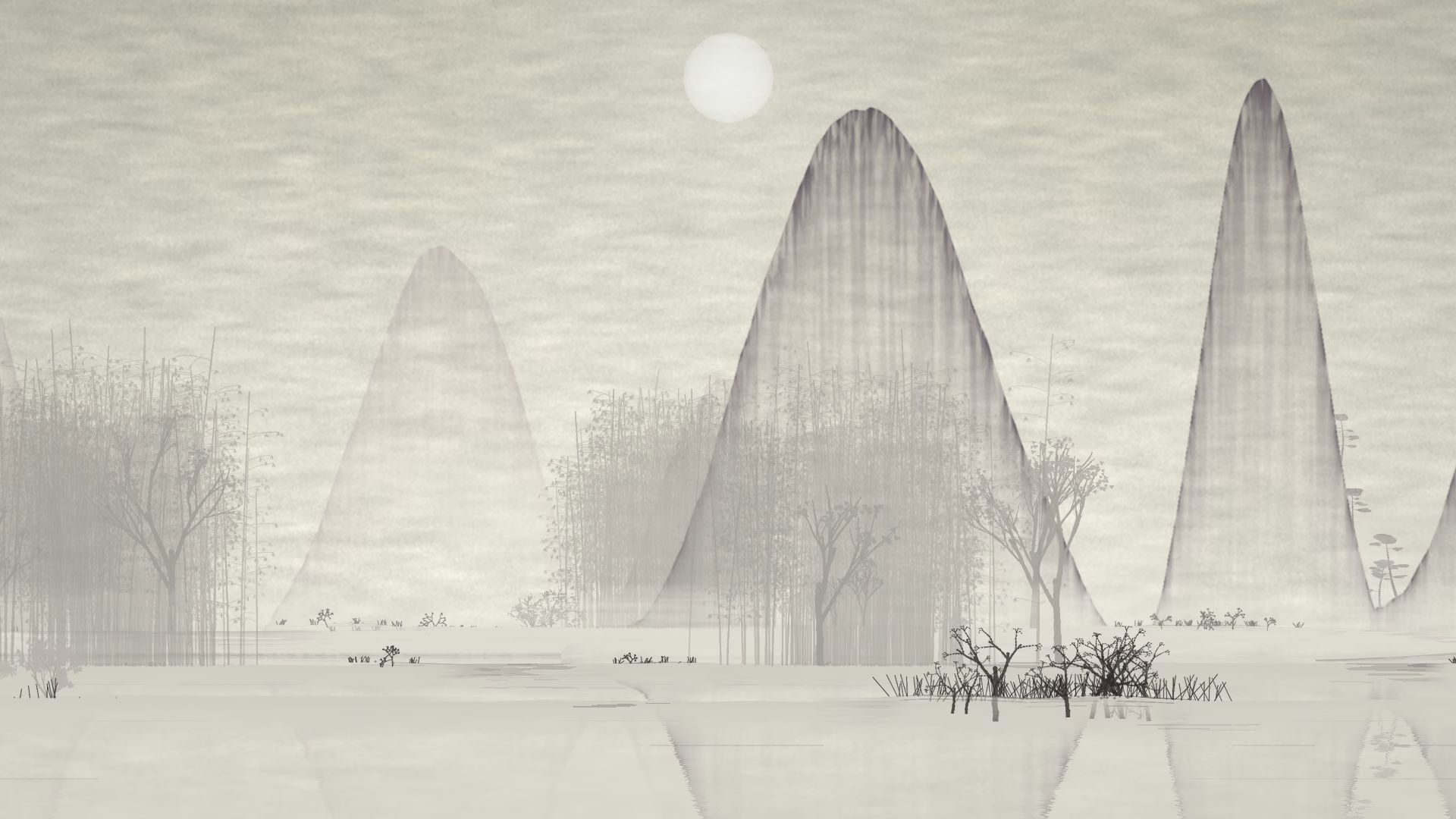
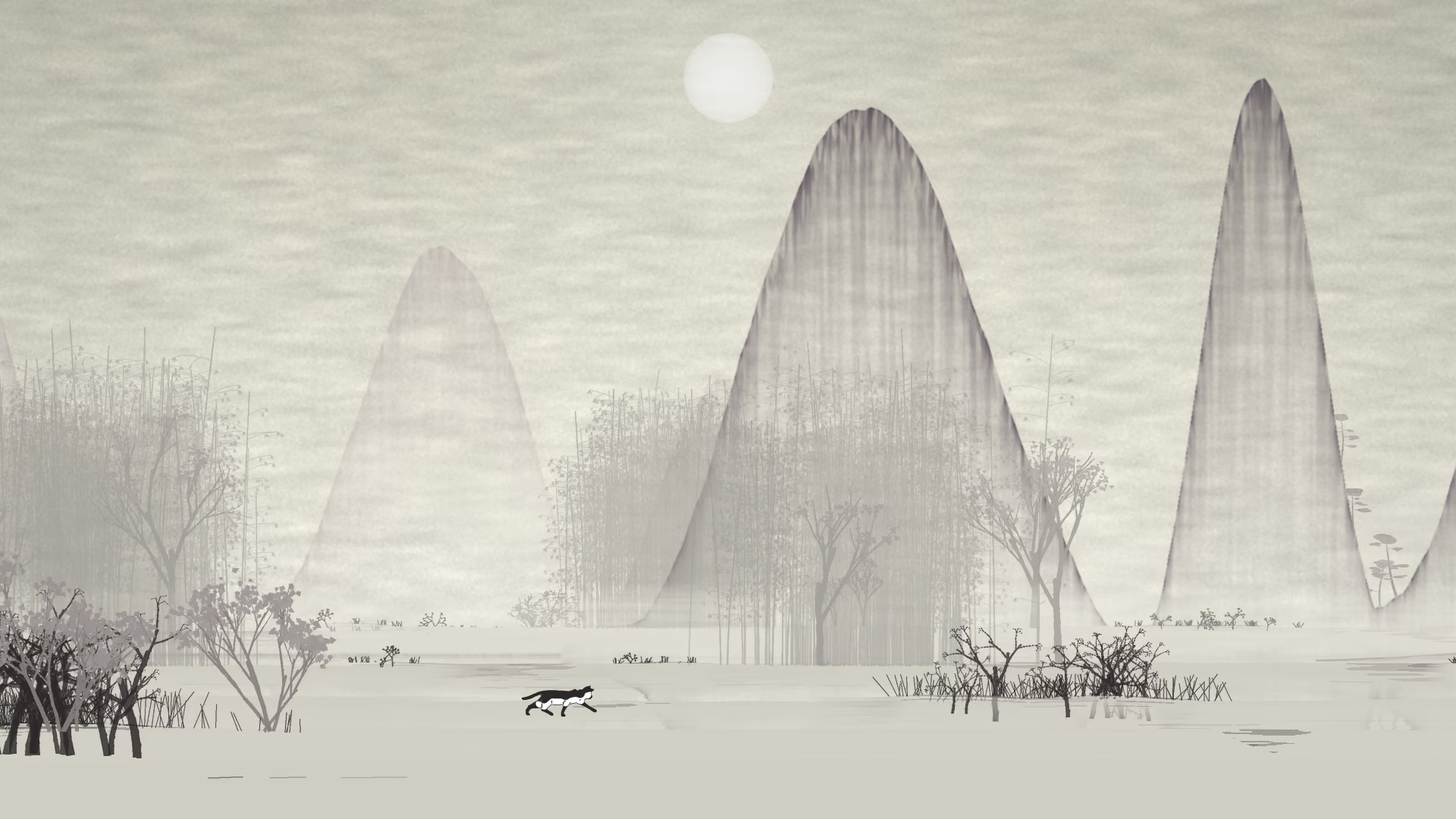
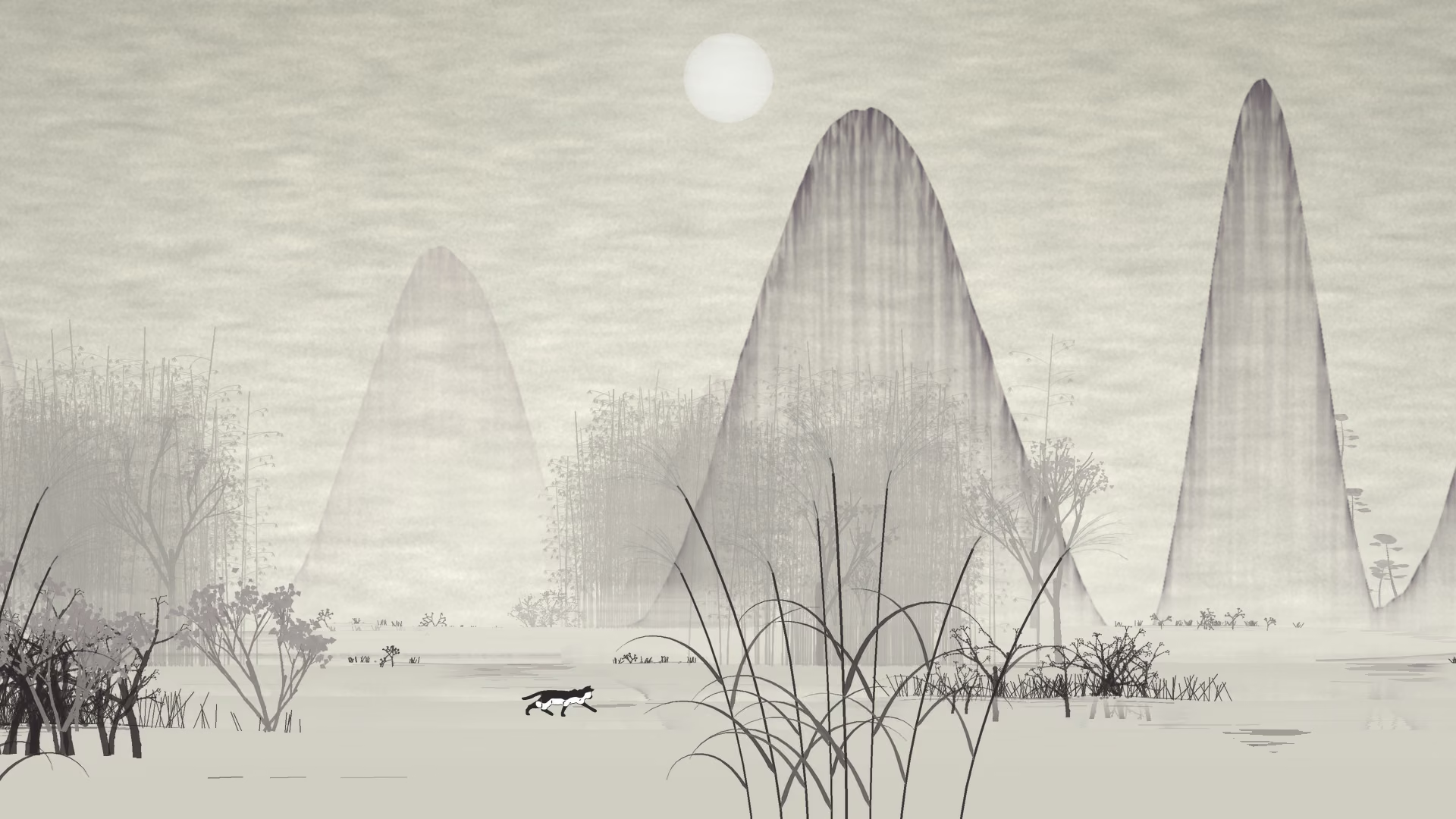
One frame from the two-hour piece, built up layer by layer from back to front. Each layer is flat; its distance sets its size and speed.
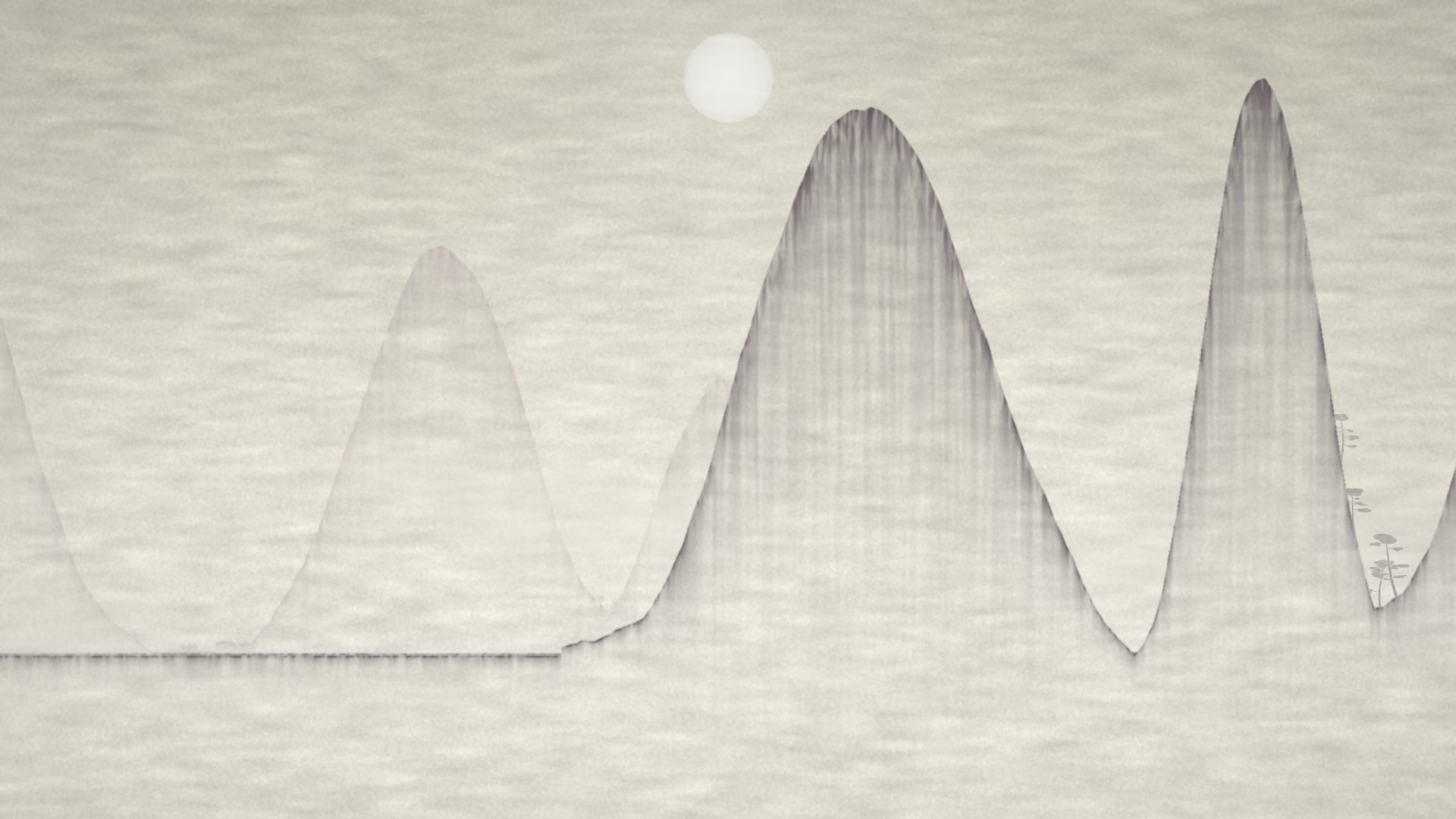
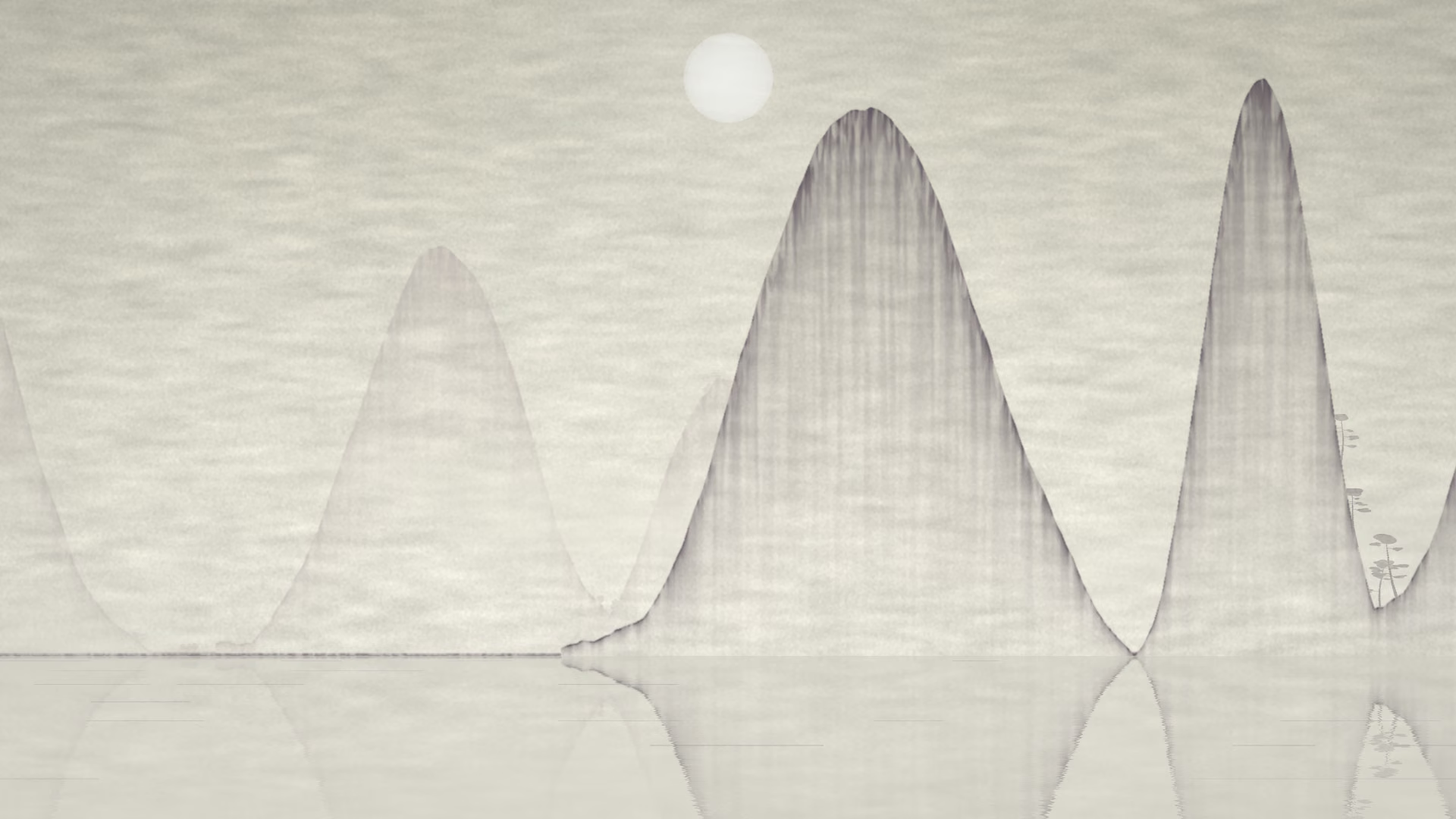
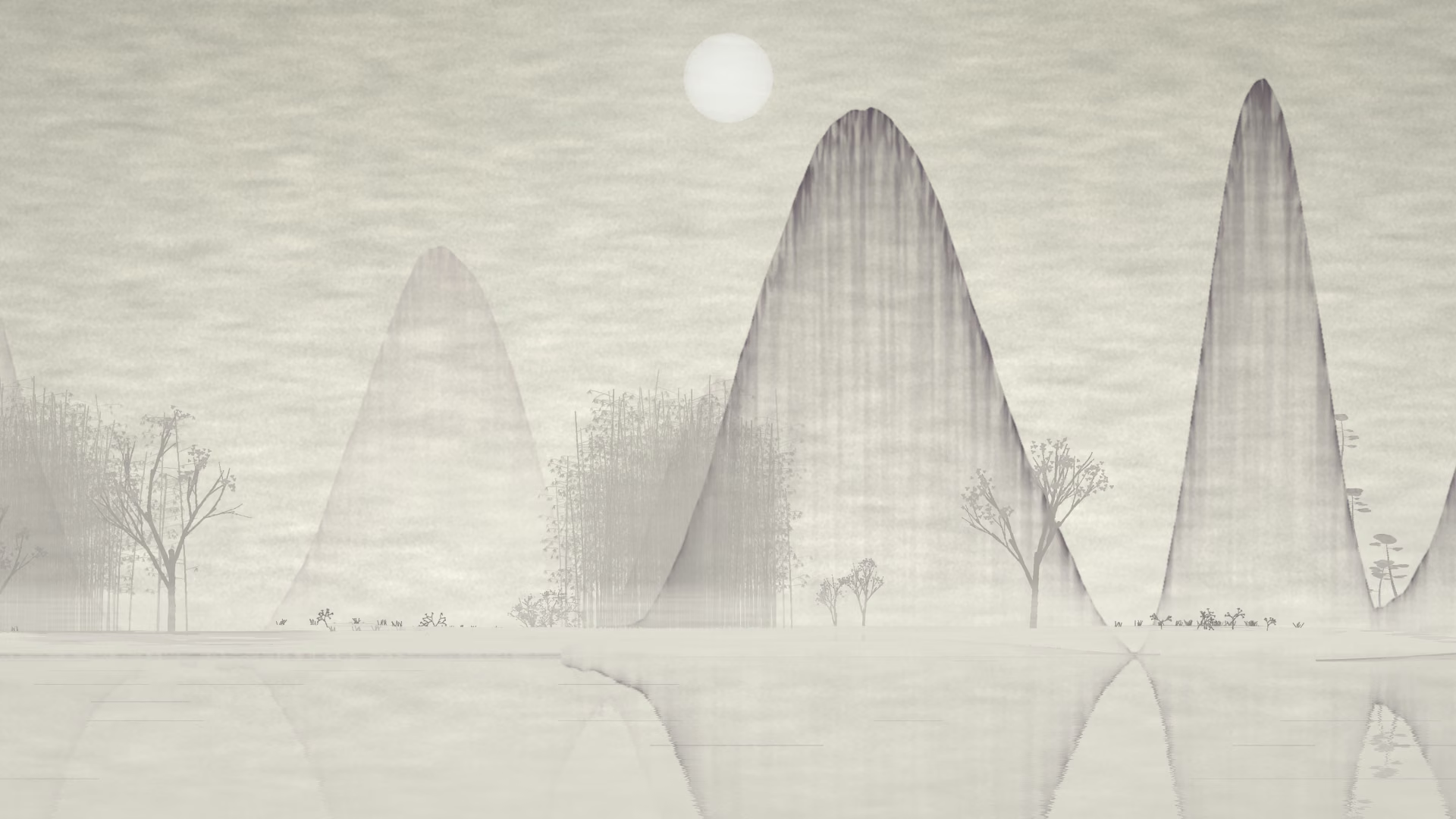
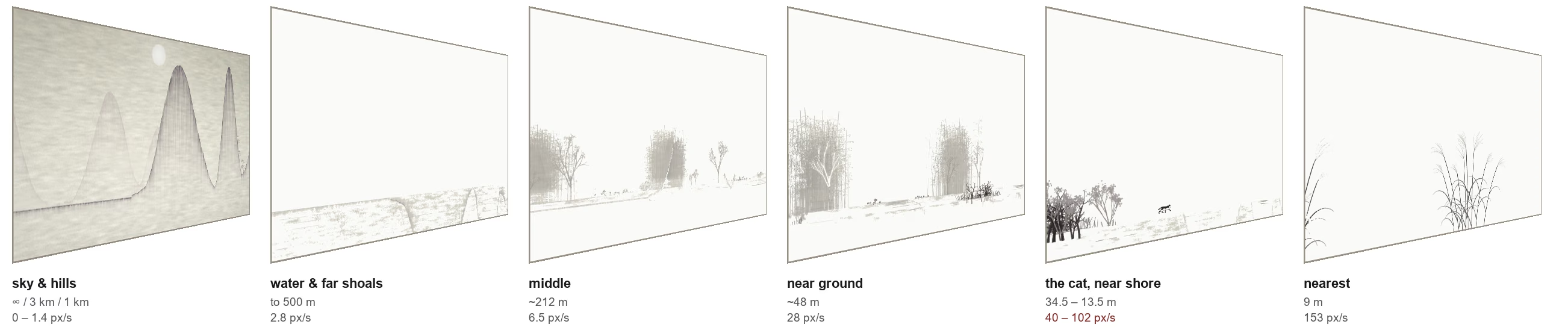
Each layer of the same frame shown separately, back to front, with its distance from the camera and its speed.
One camera
A handscroll builds space from reserved blank (留白) and mist between flat planes, without linear perspective. A scrolling video needs a distance for every plane, because distance sets its speed. The renderer therefore places every plane in front of one camera, measured against a monocular depth model below.
The renderer uses one pinhole camera: 0.58 m above the ground, horizon at 0.795 of the frame height, 12° vertical field of view (roughly a 114 mm lens). A point on the ground at frame height y lies at distance Z = h f / (y − yhorizon) and moves across the screen at a speed proportional to 1 / Z. The chart shows how far each layer moves during one breath.
Composition: the score
Each piece starts as a score (score.json): a timeline of sections, chords, rhythmic patterns, bells and scenes. The audio and video renderers both read it, so a bell and the arrival at a shore happen together. The landscape architect Lawrence Halprin borrowed the score from music and dance to design movement through landscape (the RSVP Cycles, his Motation notation). This project reinterprets his score: one score is both a landscape and its music.
The music is generative process music modelled on Steve Reich’s Music for 18 Musicians: a cycle of chords, each expanded into a section, with notes added and removed gradually. The pulse is 0.72 s (about 83 BPM), ten pulses to a breath. Mode and home pitch come from the Monthly Ordinances (《月令》): shang (商) on B♭ in late autumn, yu (羽) on B in early winter. The voices are filtered noise, and a bell marks each change between work and rest.
Reading depth with a model
Left to right: the frame, the depth known to the renderer, and Depth Anything V2’s estimate. The model picks out the grass, the cat and the ground, but reads the hills as flat shapes just in front of the sky.

Frame · renderer depth · Depth Anything V2 (relative).
Depth Anything and optical flow on an earlier frame showed layers moving at speeds no single camera could produce, and plants drawn at one-twelfth the cat’s scale. This led to the single camera model.

Earlier frame · relative depth · metric depth.
The same model on photographs of karst landscapes, for comparison.
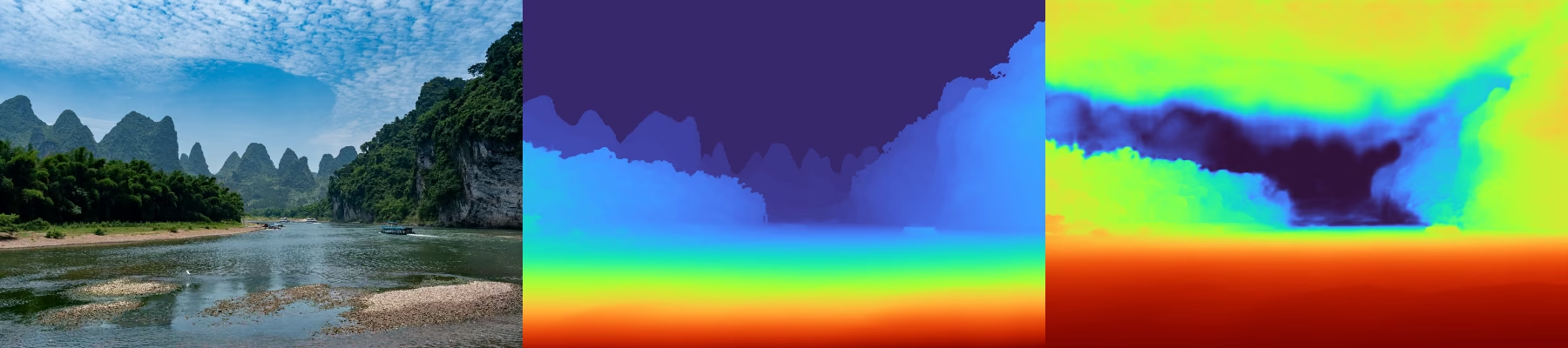
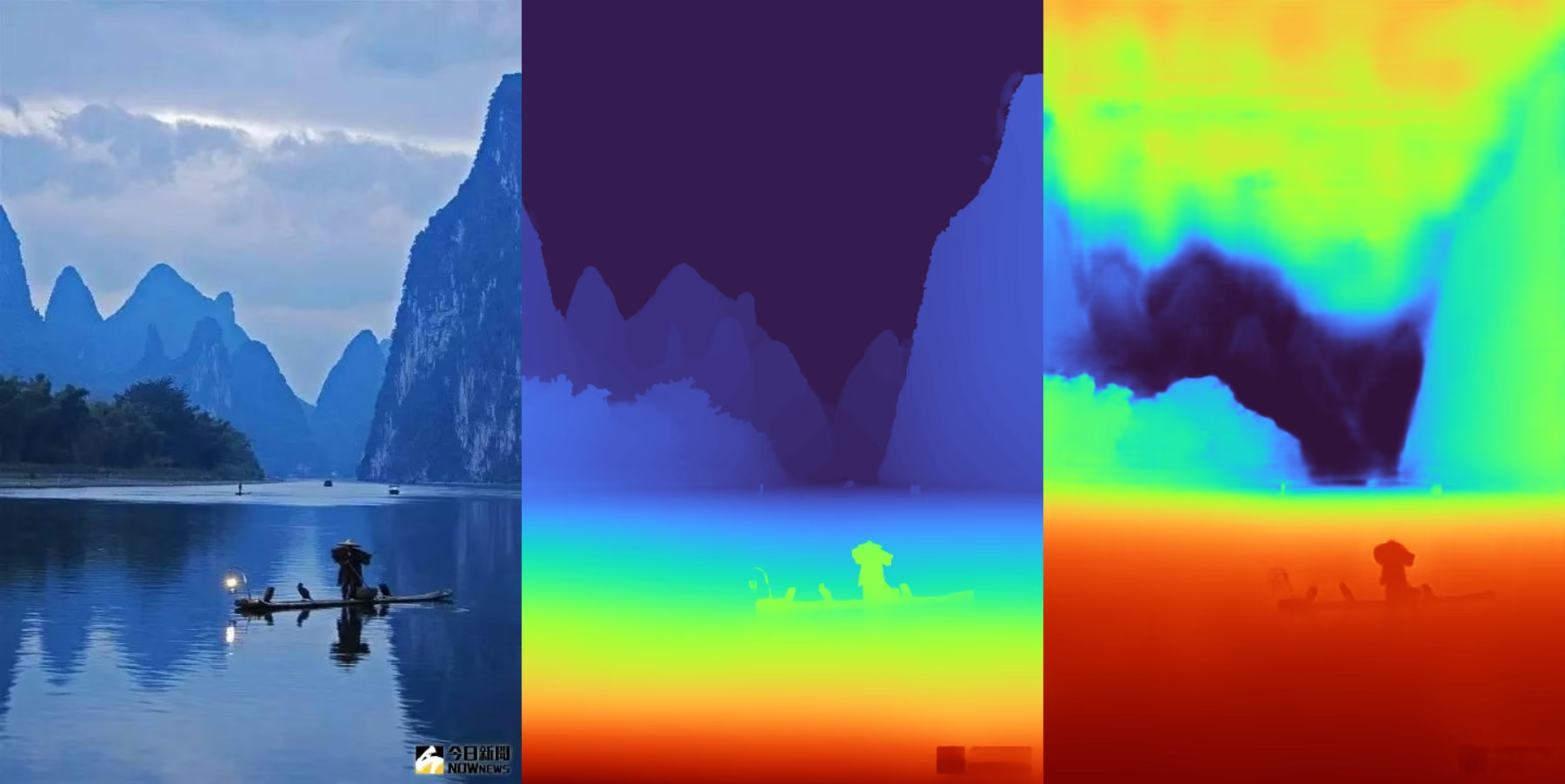
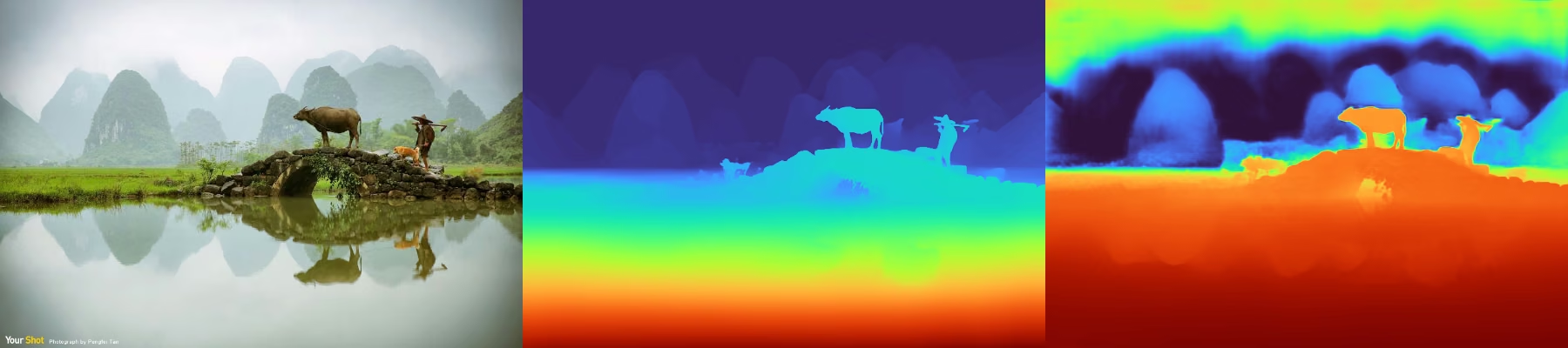
Photograph · relative depth · metric depth.
One day on one scroll
The two-hour piece moves from dawn to night in one continuous shot.