Other Natures
A Democratic Repository of American Natures in Central Park
2018 · Competition EntryOSE
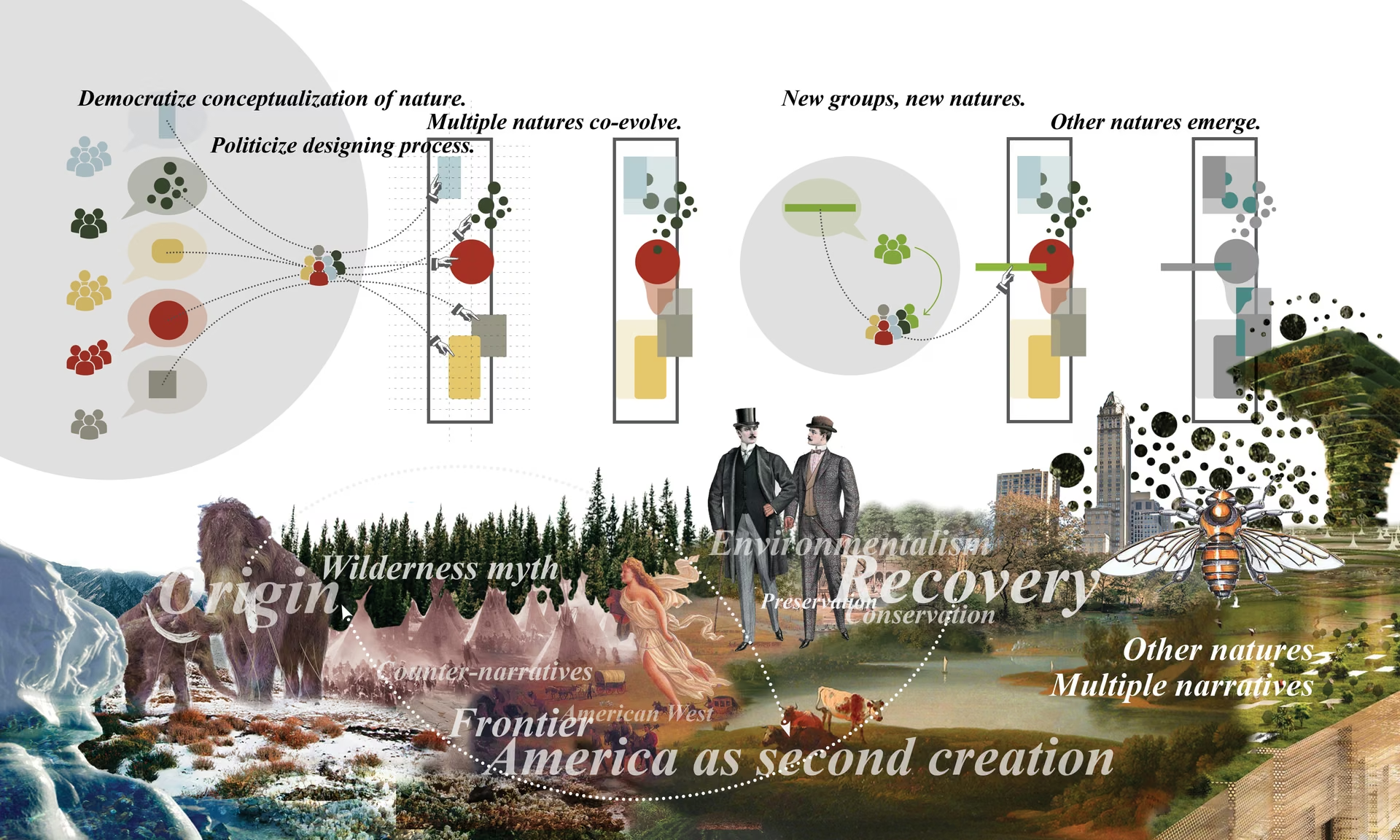
American technological historian David Nye articulated three interlocking narratives that underpin today's American culture and life: (1) second creation — early colonists using technology to transform "nature" based on a pastoral ideal; (2) wilderness myth — preserving "pristine nature" as a baseline to measure the success of second creation; (3) recovery — adopting "green" technologies to recover "nature" and undo the wrongdoings of second creation. The interlocking narratives form a moral stronghold that is difficult to argue against. On the other side are stories of Indians, failed farmers, extinct species, and many other suppressed counter-narratives — sporadic and local, hard to enter mainstream perspectives.
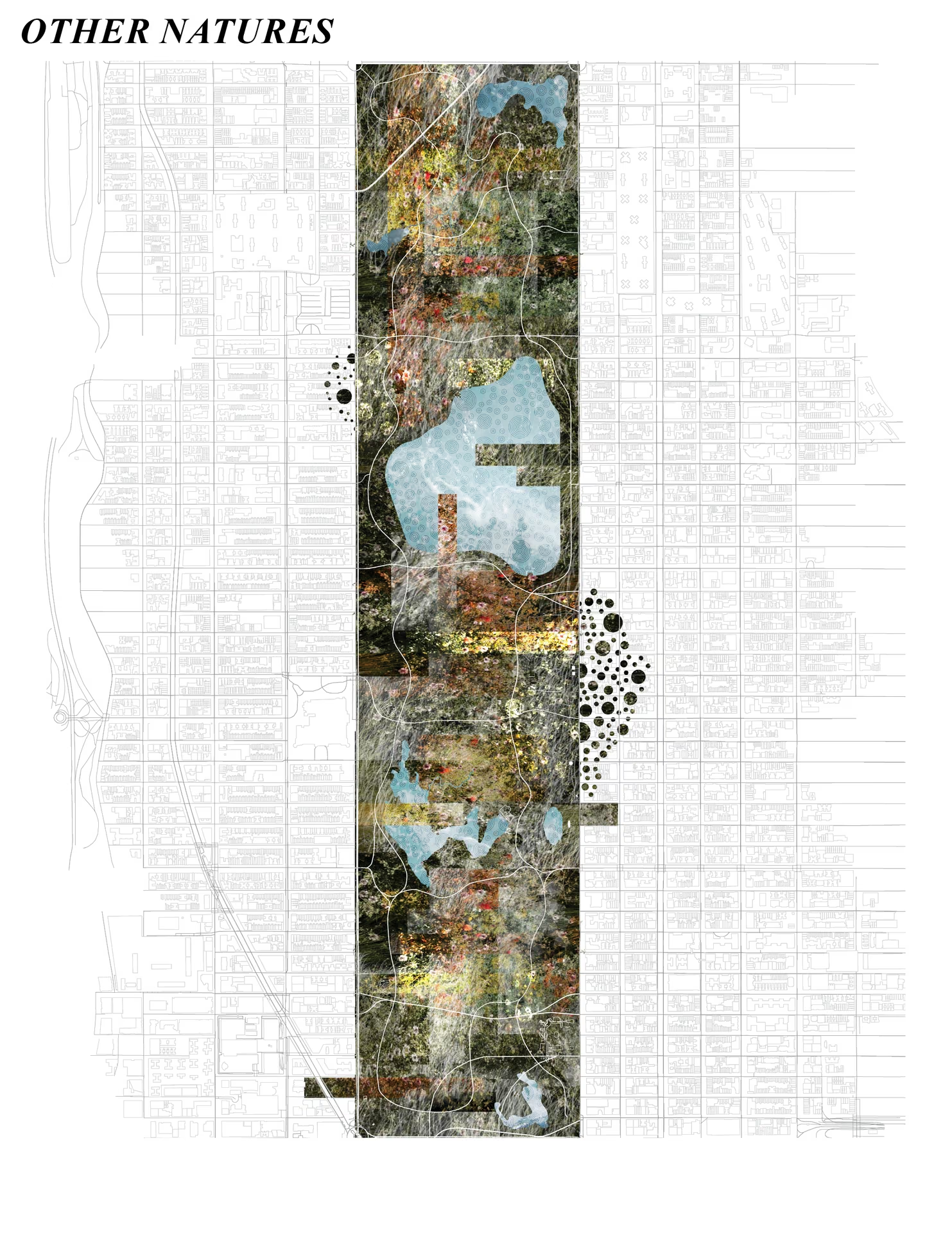
Given the current condition in Central Park, we see a chance to reshape American narratives of nature. If the old Central Park served as a repository of colonists' nature, then the new one should be a repository of multiple natures of America. We reject reducing nature to a singular grand narrative and argue for multiple meanings and heterogeneous conceptualizations.
To serve as the repository of natures, the proposal is a system of division and allocation. Built on the existing grid of Manhattan — which also represents a particular view of nature — the park is divided into garden plots that can be edited over time. Different relevant social groups can propose, construct, and maintain gardens of nature. A committee made of representatives from each group negotiates and decides collectively the allocation and maintenance regime of each garden. The process of constructing natures is democratized. The performance of negotiation and deliberation of the committee politicizes the design of natures, bringing topics such as environmental justice, ecological integrity, and the social construction of nature into the political and social realm — generating new meanings and values in today's American society.
The gridded division is only conceptual, so that one nature will permeate into adjacent ones and influence other natures through geological, hydrological, and ecological processes. While some boundaries are clear due to the intense maintenance of certain groups, other boundaries are ambiguous. Over time, multiple natures of America can co-evolve, and new natures will emerge out of the hybridization process. Through continuous working and reworking, American natures are constructed and reconstructed.